Unimasters | 30/09/2026
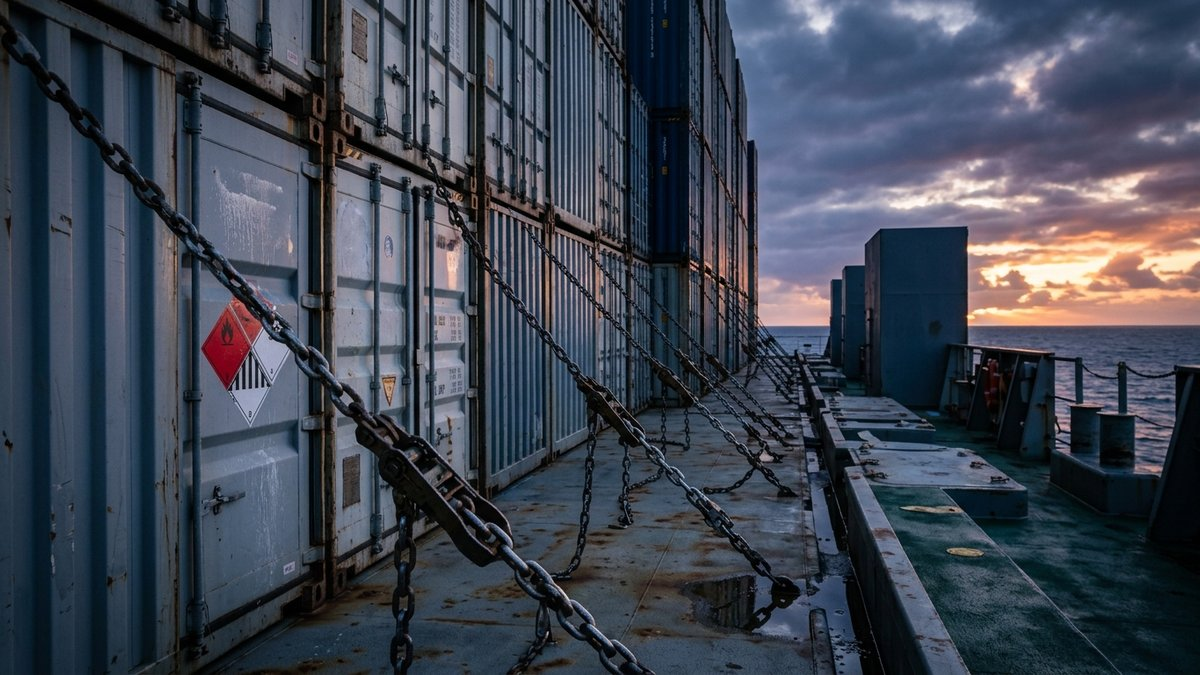
A thermal event erupts in a BESS container stowed on deck. The master orders jettison of the affected units to save the vessel. The fire is contained, the ship diverts to a port of refuge, and the shipowner declares general average. The project's 40 containers of battery systems are untouched, sitting safely in their deck positions. They will not be released. Not until the cargo owner posts security for a proportional share of the sacrifice and salvage costs. The clock on the project timeline has stopped, and the key to restart it is not in the hands of the procurement team.
The procedural moment that defines this episode is the general average declaration itself. The shipowner (or the master acting on the shipowner's behalf) communicates that general average has been declared, and an average adjuster is appointed to collect security from all cargo interests. From that moment, no cargo is released until the cargo owner provides either a cash deposit or an average guarantee.
The document that starts the clock is the General Average Notice, typically issued by the appointed average adjuster within days of the incident.
General average is governed by the York-Antwerp Rules 2016, incorporated by reference into virtually all bills of lading. The procedure unfolds as follows:
The shipowner declares general average and appoints an average adjuster (typically a specialist firm). The adjuster acts as an impartial administrator, not as an advocate for the shipowner.
The adjuster issues a General Average Notice to all cargo interests, demanding security before cargo release. The notice includes:
Under York-Antwerp Rules and the contract of carriage, the shipowner holds a lien over all cargo until security is posted. The cargo physically remains at the port of refuge or discharge port, but it cannot be released to the consignee.
The average adjuster calculates each party's contribution based on the salved value of their property. This process can take months or years. The security posted at the outset is held until the final adjustment is complete.
York-Antwerp Rules 2016 Rule XXIII establishes a six-year time bar for claims in general average, running from the date of termination of the common maritime adventure. This is the outer limit; the practical constraint is the security wall, which operates immediately.
There is no fixed deadline for posting security, but the consequence of delay is absolute: the cargo remains impounded. For a BESS project with a commissioning window, every day behind the security wall is a day lost.
General average is not a claim against the carrier. It is a shared contribution among all parties whose property was saved by the sacrifice. The carrier is not at fault; sea carriers comply with IMO regulations, and the thermal event is a cargo peril, not carrier negligence. The procedural failures that kill recovery in general average are different from those in damage claims.
The most common failure is the absence of cargo insurance. General average is included in all Institute Cargo Clauses levels: ICC(A), ICC(B), and ICC(C). This is not a coverage gap to check for; it is a standard feature of marine cargo policies. The correct angle is the exposure of the uninsured cargo owner.
Without insurance, the cargo owner must post a cash deposit, typically calculated as a percentage of the cargo's invoice value. For a 230 MWh BESS shipment, the deposit demand can be substantial. If the cargo owner cannot post the deposit, the cargo remains impounded. If the cargo owner abandons the cargo (fails to participate in general average), they forfeit all rights to the goods and any financial recourse.
The insured cargo owner, by contrast, contacts their insurer, who issues the Average Guarantee. The cargo is released within days of the guarantee being posted. The insurer later pays the cargo owner's contribution when the adjustment is finalized.
General average contributions are calculated on the basis of salved values. If the cargo owner declared a lower value than actual when purchasing insurance, the insurer pays based on the declared (lower) value. The cargo owner must fund the difference out of pocket, or the cargo remains behind the security wall.
This is not a coverage gap; it is a consequence of underdeclaration. The fix is upstream: declare the correct value at policy inception (FOB invoice value + freight + 15-20% markup, each as separate line items).
The average adjuster issues the General Average Notice and security forms to the carrier, who passes them to the freight forwarder, who passes them to the cargo owner. If the cargo owner does not respond promptly, the cargo remains impounded. There is no formal deadline, but the practical consequence is immediate: every day without security is a day without cargo.
For BESS projects, the cargo owner is typically the EPC contractor or the project company. The notice may arrive at a procurement inbox that is not monitored for maritime emergencies. The forms may be unfamiliar. The insurer may not be contacted for days. Each delay extends the impoundment.
When general average is declared, the vessel typically diverts to a port of refuge. For Asia-to-CEE BESS shipments, this could be anywhere along the route: Colombo, Jeddah, Piraeus, or a Black Sea port. The cargo remains at the port of refuge until security is posted and the vessel (or a substitute) completes the voyage.
If the vessel is a constructive total loss, the cargo may be transshipped to another vessel, but only after security is posted. The cargo owner cannot arrange alternative transport until the lien is released.
Thermal runaway in lithium-ion batteries may be argued as inherent vice, a standard exclusion in all Institute Cargo Clauses. If the insurer denies the claim on inherent vice grounds, the cargo owner is left without coverage for their general average contribution.
This exclusion must be explicitly addressed in the policy wording for BESS shipments. Without a negotiated agreement covering thermal runaway, insurers can deny claims. The fix is upstream: negotiate the inherent vice exclusion at policy inception, not after the event.
A 230 MWh BESS shipment is transiting from Shanghai to Burgas via the Cape of Good Hope (COGH) route, with feeder connection from Piraeus. The shipment comprises 40 containers of 20' HC battery systems, stowed on deck per Stowage Category D (UN3536).
During the COGH leg, a thermal event occurs in a container from another cargo owner. The master orders jettison of the affected containers and diverts to Cape Town. General average is declared. The project's 40 containers are undamaged, but they are now behind the security wall.
The project company did not purchase cargo insurance. The project company has no policy and no insurer to issue an Average Guarantee.
The average adjuster demands a cash deposit. The project company does not have the liquidity to post the deposit immediately. The cargo remains in Cape Town for 11 weeks while the project company arranges financing.
The commissioning window risks slipping. The grid connection date, negotiated with the transmission system operator, is not flexible. The project company faces the choice of posting the deposit (and depleting working capital) or abandoning the cargo (and losing the entire shipment).
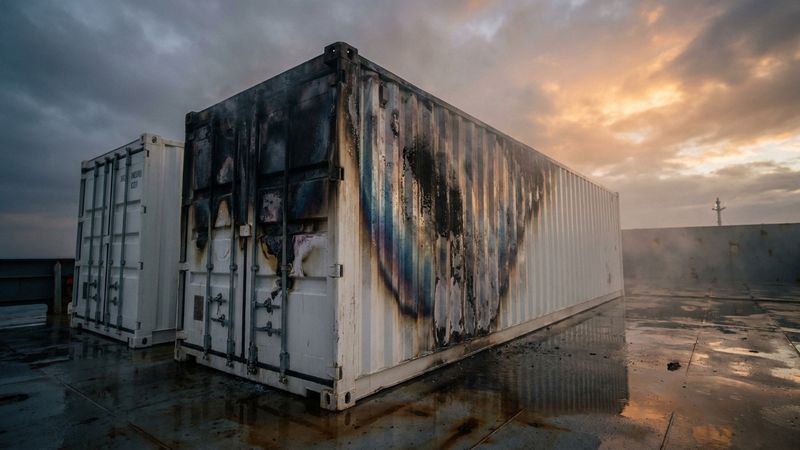
The line between routine shipment and maritime emergency is measured in degrees.
The root cause is not the thermal event. The root cause is the absence of cargo insurance. The project company's procedural miss was upstream: failing to arrange coverage before the shipment left Shanghai.
Confirm cargo insurance is in place. The policy must be in the buyer's name (or the project company's name), not the seller's. Under FOB, the buyer arranges their own coverage; under CIF, the seller provides insurance, but the buyer should verify the policy covers their interest and includes general average (all ICC levels do).
Verify the sum insured. Declare FOB invoice value + freight + 15-20% markup, each as separate line items. Underdeclaration leads to proportionally lower compensation.
Address the inherent vice exclusion. For BESS shipments, negotiate explicit coverage for thermal runaway. Without this, the insurer may deny claims.
Confirm the insurer's contact details. The project office must know whom to call when a General Average Notice arrives. This is not the broker's general inbox; it is the claims handler for the specific policy.
Notify the insurer immediately. The insurer issues the Average Guarantee. The cargo is released once the guarantee is posted.
Complete the Average Bond (Form A). This is signed by the cargo owner, confirming participation in the adjustment process.
Provide supporting documents. The adjuster requires a copy of the commercial invoice and the bill of lading to calculate the cargo's salved value.
Track the cargo's location. The freight forwarder can confirm where the cargo is held (port of refuge or discharge port) and the expected timeline for release once security is posted.
The freight forwarder does not post security; that is the cargo owner's responsibility. The forwarder's role is to:
The insurer's role is to:
Related episodes:
Q: What is general average in maritime shipping?
A: General average is a principle of maritime law requiring all cargo owners on a vessel to share proportionally in the costs of a voluntary sacrifice made to save the ship and cargo from common peril. It is governed by the York-Antwerp Rules 2016 and is incorporated into virtually all bills of lading.
Q: Does cargo insurance cover general average contributions?
A: Yes. General average is included in all Institute Cargo Clauses levels: ICC(A), ICC(B), and ICC(C). The insurer issues an Average Guarantee to release the cargo and later pays the cargo owner's contribution when the final adjustment is issued.
Q: What happens if a cargo owner does not have insurance when general average is declared?
A: The uninsured cargo owner must post a cash deposit (calculated as a percentage of the cargo's invoice value) before the cargo is released. If the deposit is not posted, the cargo remains impounded. If the cargo owner abandons the cargo, they forfeit all rights to the goods.
Q: How long does the general average adjustment process take?
A: The final adjustment can take months or years, depending on the complexity of the incident. The security (cash deposit or Average Guarantee) is held until the adjustment is complete. York-Antwerp Rules 2016 Rule XXIII establishes a six-year time bar for claims.
Q: What documents are required to release cargo after a general average declaration?
A: The average adjuster requires an Average Bond (Form A) signed by the cargo owner, an Average Guarantee (Form B) signed by the insurer (or a cash deposit if uninsured), a copy of the commercial invoice, and the bill of lading.
Q: Can the carrier be held liable for a thermal event that triggers general average?
A: No. Sea carriers comply with IMO regulations, and a thermal event in cargo is a cargo peril, not carrier negligence. General average is a shared contribution among all parties whose property was saved, not a claim against the carrier.
Q: How does the inherent vice exclusion affect BESS cargo insurance claims?
A: Thermal runaway in lithium-ion batteries may be argued as inherent vice, a standard exclusion in all Institute Cargo Clauses. For BESS shipments, this exclusion must be explicitly addressed in the policy wording at inception. Without a negotiated agreement, insurers can deny claims related to thermal runaway.

