Unimasters | 04/09/2026
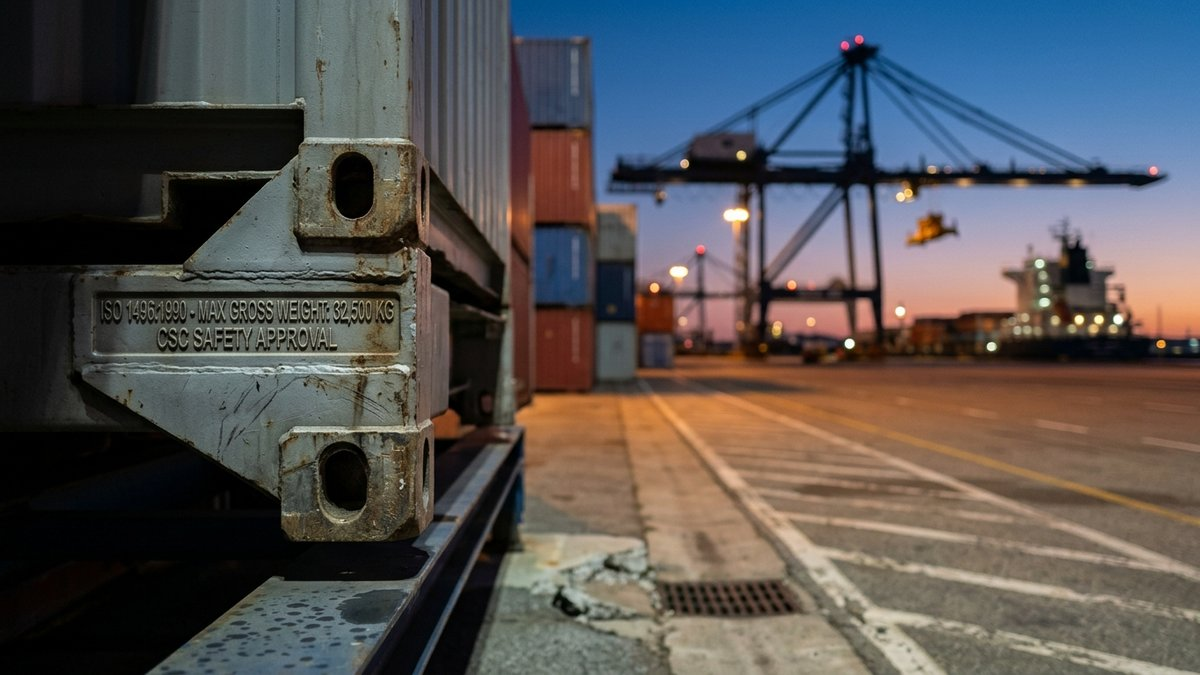
A 43-ton BESS container arrives at the construction site outside Plovdiv. The road carrier's liability for that container, under the CMR Convention (Geneva, 1956), is capped at 8.33 SDR per kilogram of gross weight. Multiply 43,000 kilograms by 8.33 SDR: the ceiling is approximately 358,000 SDR. The commercial value of that container is a bit higher. The gap between what the carrier owes and what the cargo is worth is not a coverage failure. It is the convention working exactly as designed.
The carrier's maximum liability is fixed at the moment the goods are accepted for carriage. For road transport under CMR, the consignment note records the gross weight; for sea transport under the Hague-Visby Rules, the bill of lading records the number of packages and the weight. These documents set the arithmetic that determines the maximum the carrier will ever pay. The clock on the ceiling starts when the approves the transport document.
Two conventions govern the liability limits for BESS shipments moving from Asian factories to CEE construction sites: the CMR Convention (Geneva, 1956) for road transport, and the Hague-Visby Rules (Brussels, 1968) for sea carriage.
Under CMR Article 23(3), compensation for total or partial loss of goods "may not exceed 8.33 units of account per kilogram of gross weight short." The unit of account is the Special Drawing Right (SDR), as defined by the International Monetary Fund. For a 43-ton BESS container, the maximum carrier liability is 43,000 kg × 8.33 SDR = 358,190 SDR.
The SDR (XDR) to USD exchange rate has mostly fluctuated between 1.30 and 1.45 over the past few years. Because the Special Drawing Rights (SDR) value is based on a basket of major currencies—the US Dollar, Euro, Chinese Renminbi, Japanese Yen, and British Pound—it tends to be far more stable than any single individual currency.
CMR Article 23(4) adds that the carrier must also refund carriage charges, customs duties, and other charges incurred in respect of the carriage. These amounts are recoverable in full, not subject to the per-kilogram cap. The 2.7% ad valorem duty on HS 8507.60.00.90 (lithium-ion batteries) is therefore recoverable from the carrier if the loss is proven.
Under the Hague-Visby Rules Article IV rule 5(a), the carrier's liability is limited to 666.67 SDR per package or unit, or 2 SDR per kilogram of gross weight, whichever is higher. For a 43-ton BESS container shipped as a single unit, the calculation is:
The higher figure applies: 86,000 SDR. This is the maximum the sea carrier owes for a total loss of one BESS container, regardless of its commercial value.
Both conventions provide a mechanism to lift the limit, but it requires action before the shipment.
CMR Article 24 allows the sender to declare a value exceeding the Article 23 limit by entering it in the consignment note. The carrier may charge a surcharge for accepting this higher liability. Without the declaration in the consignment note itself, no higher limit applies. German courts have held that a framework contract or transport order alone is insufficient; the value must appear on the CMR note (TT Club, 2021).
CMR Article 26 allows the sender to declare a "special interest in delivery" by entering a fixed amount in the consignment note. This covers consequential losses from delay or damage beyond the goods' value. Again, the declaration must appear on the consignment note, and the carrier may charge a surcharge if he agrees to accept the shipment.
Hague-Visby Article IV rule 5(a) similarly allows the shipper to declare the nature and value of the goods before shipment and have that value inserted in the bill of lading. This ad valorem (according to value) declaration binds the carrier to a higher figure in exchange for additional freight. However it is up to the Carrier to accept or reject the shipment in such circumstances.
The carrier's limited liability is not a coverage gap in the ordinary sense. It is a deliberate allocation of risk, codified in international conventions ratified by over 55 countries. The gap between the limited liability and the cargo's value is the space that cargo insurance exists to fill. Claims die when project teams treat the carrier's liability as if it were insurance, or when they fail to understand the arithmetic before the loss occurs.
BESS containers are heavy and valuable. A 43-ton container at 8.33 SDR/kg yields a CMR ceiling of approximately 358,000 SDR. The same container at 2 SDR/kg under Hague-Visby yields 86,000 SDR. Neither figure approaches the commercial value of a modern lithium-iron-phosphate battery system.
The conventions were drafted for an era of lower-value, higher-weight cargo. A pallet of steel and a pallet of electronics attract the same per-kilogram ceiling if they weigh the same. For BESS, the mismatch is structural: the cargo is both heavy and expensive, but the ceiling scales only with weight.
Carrier liability requires proof of carrier fault. Under CMR Article 17, the carrier is liable for loss or damage occurring between the time of taking over the goods and the time of delivery, unless the loss resulted from circumstances the carrier could not avoid and the consequences of which the carrier was unable to prevent. Under Hague-Visby Article IV rule 2, the carrier has a catalogue of 17 defences, including "perils of the sea," "act of God," and "insufficiency of packing."
If the cause of loss falls outside carrier liability, the limited liability becomes irrelevant because the carrier owes nothing. A cargo policy responds to the loss regardless of whether the carrier was at fault, subject to policy terms. The ceiling is the maximum the carrier pays when fault is proven; it is not a guarantee of any payment at all.
For road transport, the CMR consignment note is the central evidence document. If the sender wishes to declare a higher value under Article 24 or a special interest under Article 26, that declaration must appear on the consignment note. A side agreement, a framework contract, or an email exchange is not sufficient.
In practice, most BESS shipments move on standard consignment notes with no value declaration. The trucking company's liability is capped at 8.33 SDR/kg by default. The project team discovers this only when a loss occurs and the carrier's insurer points to Article 23(3).
For sea transport, the bill of lading's description of the cargo determines whether the per-package or per-kilogram limit applies. If the bill states "1 × 20' HC container STC" (said to contain), the carrier may argue that the container is the package, yielding a ceiling of 666.67 SDR for the entire shipment. If the bill enumerates the number of units inside the container, the per-package limit applies to each enumerated unit.
For BESS, the container is the battery system; there are no separate packages inside. The per-kilogram calculation (2 SDR/kg) will almost always yield the higher figure, but the bill of lading must record the gross weight accurately for this calculation to apply.
CMR Article 32 sets a one-year limitation period for actions arising from carriage, running from the date of delivery or, in cases of total loss, from the thirtieth day after the agreed time limit or the sixtieth day after the carrier took over the goods. Hague-Visby Article III rule 6 sets a one-year time bar from the date of delivery or the date when the goods should have been delivered.
Miss the limitation period and the claim is extinguished, regardless of the ceiling or the merits. The cargo policy has its own notice and claim deadlines, but they are contractual, not statutory. The carrier's limitation period is mandatory and cannot be extended by agreement.
A BESS container is damaged during road transport from Burgas to a construction site 400 km inland. The container weighs 43 tons. The damage is proven to result from the road carrier's negligence: the driver parked overnight at an unsecured location, and the container was struck by another vehicle.
The project team submits a claim to the road carrier. The carrier's insurer accepts liability and calculates compensation under CMR Article 23(3): 43,000 kg × 8.33 SDR = 358,190 SDR. The carrier also refunds the carriage charges and the 2.7% customs duty paid on the container under Article 23(4).
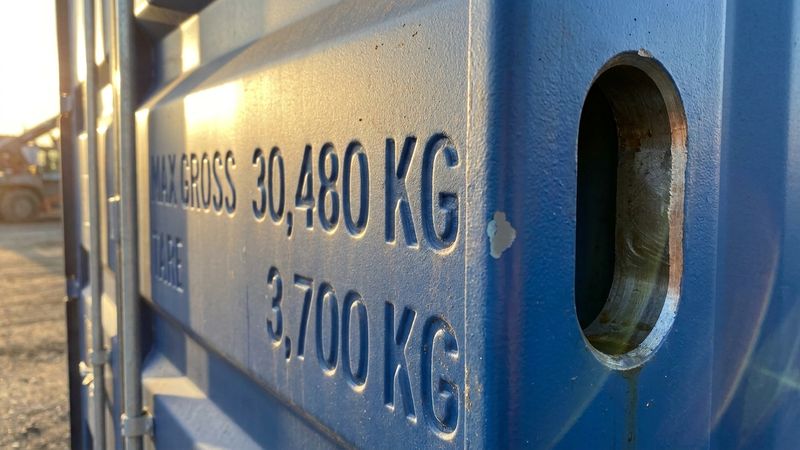
The numbers stamped in steel rarely match the numbers that matter in court.
The commercial value of the container is several times the 358,190 SDR ceiling. The project team had not declared a higher value under Article 24. The consignment note recorded only the gross weight and the standard CMR terms. The gap between the liability limit and the commercial value is unrecoverable from the carrier.
The project's cargo insurance policy, arranged under ICC(A) terms, responds to the full insured value. The insurer pays the difference between the commercial value and the amount recovered from the carrier. The claim is settled, but the project team learns that the carrier's liability was never designed to cover the full loss.
The procedural miss was not the claim itself. It was the failure to understand, before the shipment moved, that the CMR ceiling would leave a gap only the cargo policy could fill.
Project office:
Freight forwarder:
Site team:
Project office:
Insurer:
Q: What is SDR?
A: The Special Drawing Rights (SDR)—internationally abbreviated as XDR—is an international reserve asset, created by the International Monetary Fund (IMF) in 1969. It is not a circulating paper currency, but rather a digital form of money used strictly by governments, central banks, and international organizations to supplement their official currency reserves.
Q: What is the value of SDR (XDR)?
A: The SDR (XDR) to USD exchange rate has mostly fluctuated between 1.30 and 1.45 over the past few years. Because the Special Drawing Rights (SDR) value is based on a basket of major currencies—the US Dollar, Euro, Chinese Renminbi, Japanese Yen, and British Pound—it tends to be far more stable than any single individual currency.
Q: What is the CMR liability limit for a 43-ton BESS container?
A: Under CMR Article 23(3), the limit is 8.33 SDR per kilogram of gross weight. For 43,000 kg, the ceiling is 358,190 SDR. The carrier must also refund carriage charges and customs duties under Article 23(4).
Q: What is the Hague-Visby liability limit for a BESS container shipped by sea?
A: Under Hague-Visby Article IV rule 5(a), the limit is 666.67 SDR per package or 2 SDR per kilogram, whichever is higher. For a 43-ton container shipped as one unit, the per-kilogram calculation (86,000 SDR) applies.
Q: How can the CMR liability ceiling be lifted?
A: The sender must declare a higher value in the CMR consignment note under Article 24, and the carrier may charge a surcharge if he agrees to accept such a value declaration. A framework contract or email agreement is not sufficient; the declaration must appear on the consignment note itself.
Q: Does cargo insurance duplicate carrier liability?
A: No. Cargo insurance covers the full insured value of the goods, regardless of carrier fault. Carrier liability is capped by convention and requires proof of carrier fault.
Q: What is the limitation period for a CMR claim against the road carrier?
A: CMR Article 32 sets a one-year limitation period from the date of delivery, or from the thirtieth day after the agreed time limit in cases of total loss. Missing this deadline extinguishes the claim.
Q: When does CMR Article 29 break the liability ceiling?
A: CMR Article 29 removes the ceiling if the damage was caused by the carrier's wilful misconduct or default equivalent to wilful misconduct under the law of the court seized. Examples include deliberate disregard of express delivery instructions or leaving cargo unattended in an unsecured location.
Q: What documents should the project team review before the inland leg begins?
A: The CMR consignment note template, the cargo insurance policy (confirming the insured sum covers full commercial value), and the trucking company's CMR liability insurance certificate. If a value declaration under Article 24 is required, negotiate it before the shipment moves.

